Some
Reflections on Lakota Language Structures
as looked at by a naive* non-Native
- by A. W. Tüting -
Part 3 - continuation
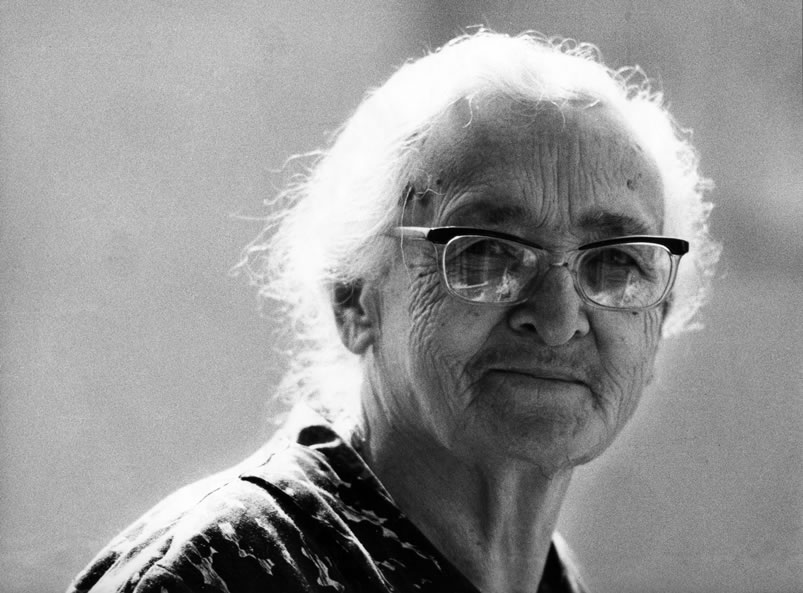 |
copyright ⓒ 1972 awtueting
Iṫanċan, unkitakuyepi t'a pi
na tuwa oyas'in Niṫaoḱolakiċye op'apika
Maḱa letanhan iyaya pi kin
Niṫokicunze ekta wiċakiċo yeṫo!

Still more on the Lakota 'adverb's' nature ...... So, once more the careful assumption that - not unlike in the relationship between verbs - nouns, and nouns - adjectives - there isn't any fundamental difference of word class between verbs and adverbs either ... This said, there is still another peculiarity with Lakota 'adverbs' giving rise to a statement like this: There are many parts of speech not only ranged in the Procrustean bed of Latin-based grammatical nomenclature as 'adverbs' but even seemingly appearing in some way different from 'normal' verbs by their outer shape, e.g. tanyan adv. - 'well' as in "tanyan yahi yelo!" - Welcome! (lit.: you have arrived here well) or in "He tanyan eċunpi" - It/that is done well. But also: matanyan, untanyan pi, hena tanyan pi - I am well, we are well, they are well (!) hehanyela adv. - so far (of space), so long (of time), only so far, as in "Hehanyela woglake." - He talked only so far, or "Ho le wiċowoyake kin hehanyela oyaka pelo." - Yes, this narrative was told only so far. But also: "Henihanyela pi." - You - all - were only so far. (!) lecala adv. - lately, a little while ago, soon perhaps But also: "Malecala." - I am of recent times. (!) henala adv. - only so many/so much, none, all gone But also: "Henamala." - Mine are all gone/I have none. Or: "Henakicila." - All were gone for him, i.e. used up. (!) (Hopefully, soon to be continued) |
'Departing & Coming Home'(Hopefully, soon to be continued) |

Here you can get information on the author's preferred
Also visit Jan Ullrich's (LLC) very informativeTeaching Lakota Page including vocabulary quiz etc.
You are reader nr.
since December 2003
(Homepage) | (Other poems in different languages) | (My Poems) | (Lakota Poetry)